Bin lorries play a critical role in keeping towns, cities, and communities across the UK running smoothly, yet few people realise just how complex modern refuse collection vehicles (RCVs) have become. Far from being simple waste trucks, today’s bin lorries are highly specialised machines designed to operate safely in tight urban streets, handle heavy and varied waste streams, and meet increasingly strict environmental and regulatory standards. Whether you’re responsible for managing a council fleet, operating commercial waste contracts, or planning future vehicle investment, understanding how refuse trucks work, how they are specified, and what separates a reliable vehicle from a costly mistake is essential.
This comprehensive guide from Premier Refuse Solutions breaks down everything you need to know about bin lorries in the UK, from vehicle types and weights to costs, licensing, safety, and buying or hiring considerations, helping you make informed decisions that support efficient, compliant, and future-ready waste operations.
Table of contents
- What do people call a “garbage truck” in the UK?
- What is an RCV?
- Who invented the bin lorry?
- What types of refuse trucks are used in the UK?
- How does a bin lorry work?
- How heavy is a UK bin lorry (and what is payload)?
- Is a bin lorry an HGV, and what licence is required?
- Do you need an operator’s licence for refuse trucks?
- How much horsepower does a bin lorry have?
- How much does a refuse truck cost in the UK?
- How many bin lorries are there in the UK?
- What time can bin lorries start operating in the UK?
- Is it illegal to leave wheelie bins on the pavement?
- What sizes of bins can be lifted by a bin lorry?
- How much do binmen get paid in the UK?
- Safety and compliance features you should look for
- Diesel vs electric: what is changing in UK fleets?
- Buying or hiring: what should you check first?
- Quick checklist: choosing the right refuse truck
What Is a Bin Lorry Called in the UK?
In everyday language, most people in the UK refer to refuse trucks as bin lorries. However, within the waste management and transport industries, several other terms are commonly used:
- Refuse Collection Vehicle (RCV) – the formal industry term
- Refuse truck – widely used in professional settings
- Dustcart – a traditional term still used in some regions
- Bin wagon – informal or regional terminology
Understanding these terms matters when searching for vehicles, spare parts, technical specifications, or tender documentation. “RCV” is the most accurate and widely recognised industry term.
Interestingly, terminology can vary significantly around the world. For example, in the United States, the term “garbage truck” or “trash truck” is most common. In Australia, you might hear “rubbish truck” or “garbage truck.” Even within the UK, there are various everyday terms, including “dustbin lorry,” “bin wagon,” and “bin van.” This diversity of language adds a touch of local character and can often reflect regional slang or preference.
The technical industry term “Refuse Collection Vehicle” (RCV) is often used across English-speaking countries, especially in more formal settings or documentation.
What Is an RCV (Refuse Collection Vehicle)?
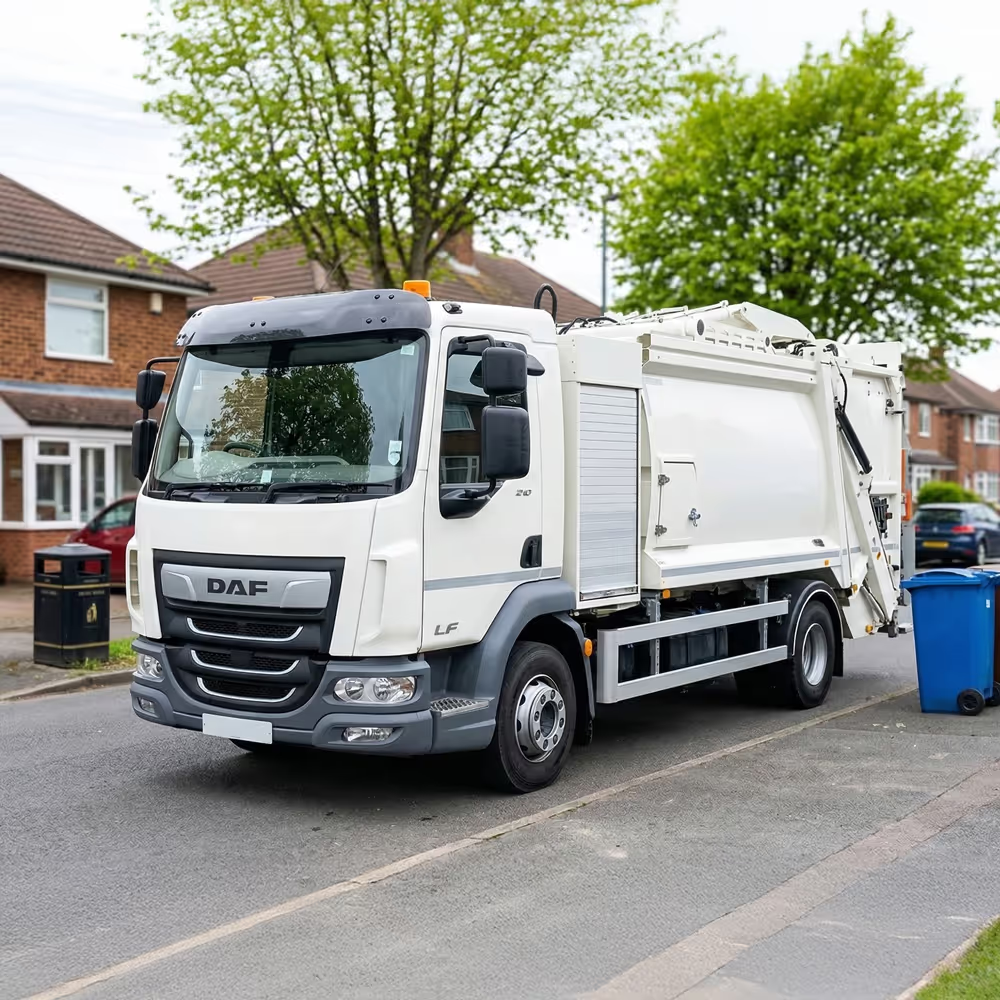
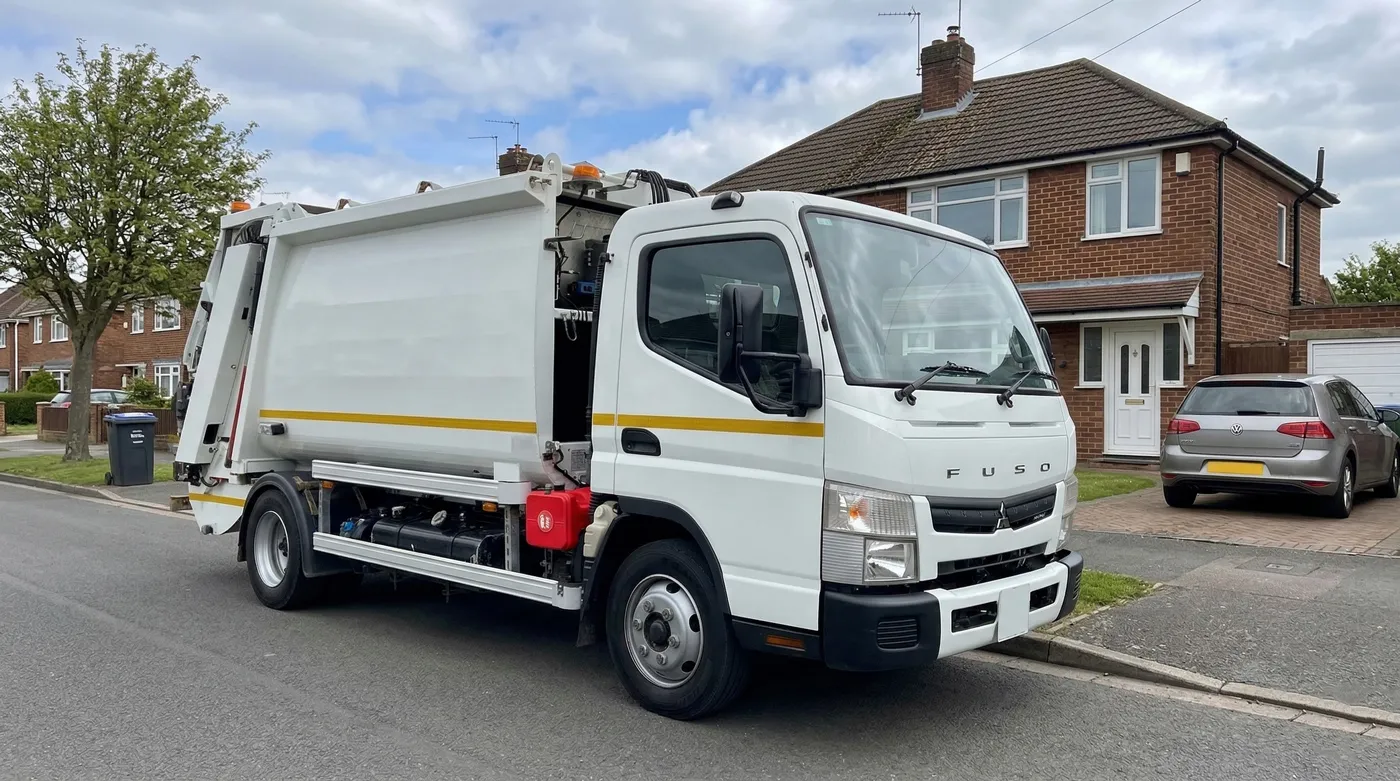
An RCV is a specialist heavy vehicle designed specifically for waste and recycling collection. Unlike standard lorries, RCVs integrate complex hydraulic, mechanical, and safety systems to allow crews to lift bins, compact waste, and transport heavy loads safely.
A typical RCV includes:
- A chassis (usually 18t–32t GVW)
- A refuse body with compaction system
- A bin lift compatible with specific container types
- Hydraulic systems, safety interlocks, and control panels
RCVs are built for constant stop-start use, high payloads, and daily operation in challenging environments such as narrow streets, housing estates, and busy urban centres.
Who Invented the Bin Lorry?
The evolution of the bin lorry mirrors the development of modern cities. Early waste collection relied on open carts and manual labour. As urban populations grew in the late 19th and early 20th centuries, enclosed vehicles and mechanised lifting systems became essential.
Key milestones included:
- Covered bodies to reduce odour and spillage
- Hydraulic bin lifts to reduce manual handling
- Compaction systems to increase payload efficiency
Modern RCVs are the result of decades of incremental engineering improvements focused on safety, efficiency, and environmental performance. While no single individual can claim the invention of the modern bin lorry, it is clear that a combination of innovations over more than a century has led to the efficient refuse collection vehicles we see today. These advancements have made waste management cleaner, safer, and more efficient for both workers and the public.
What Types of Refuse Trucks Are Used in the UK?
Rear Loader Refuse Trucks
The most common RCV type in the UK. Waste is loaded manually or semi-automatically at the rear into a hopper and compacted into the body.
Best for:
- Household collections
- Mixed waste and recycling
- Urban and suburban routes
Side Loader Refuse Trucks
Often automated, lifting bins from the side of the vehicle.
Best for:
- Wide streets
- High-volume residential routes
- Reduced crew sizes
Front Loader Refuse Trucks
Primarily used for commercial and industrial waste.
Best for:
- Large containers
- Trade waste
- Industrial estates
Specialist RCVs
Including:
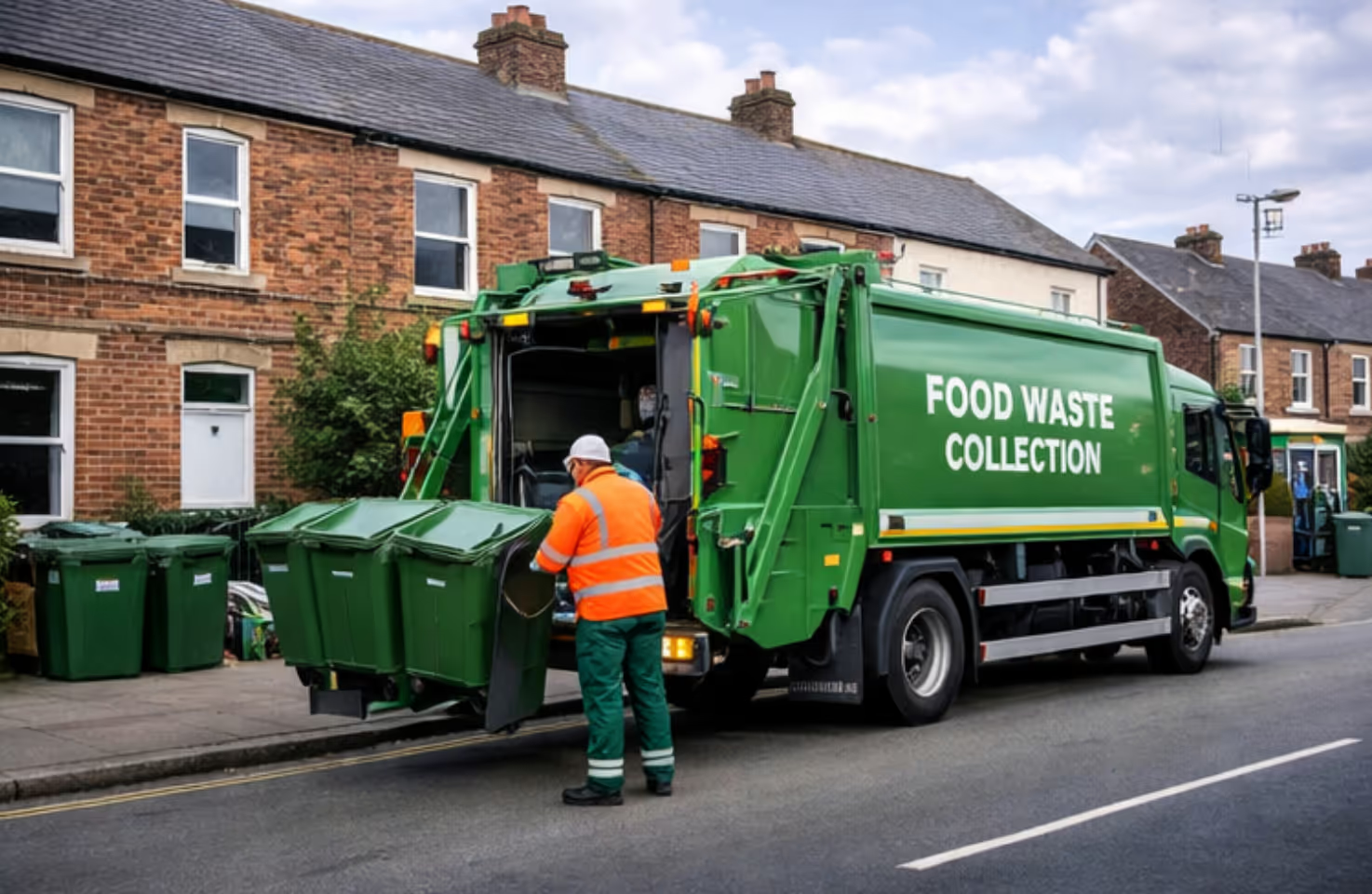
- Food waste collection vehicles
- Narrow access or satellite vehicles
- Recycling-specific multi-compartment bodies
Choosing the right type is not just about preference. It depends on route access, waste type, bin standards, payload needs, and tipping site requirements.

Types of Bin Lorry Lifts: Split Lifts vs Trade Lifts
One of the most important, and often overlooked, components of a refuse collection vehicle is the bin lift. The type of lift fitted to a bin lorry directly affects what containers you can service, how efficiently crews work, and how much weight the vehicle can safely handle.
In the UK, the two most common lift types are split lifts and trade lifts. Understanding the difference is essential when specifying a vehicle for household, commercial, or mixed-use collections.
What Is a Split Lift?
A split lift is designed primarily for domestic waste collection. It allows a refuse truck to lift and empty two standard household wheelie bins at the same time, typically 120L, 180L, or 240L bins.
Key characteristics of a split lift:
- Can lift two domestic bins simultaneously
- Designed for lighter bin weights
- Optimised for fast, high-volume household rounds
- Commonly used on council and residential routes
Split lifts increase productivity by reducing the number of lifting cycles required on busy streets. This makes them ideal for areas with high housing density and consistent bin standards.
Best suited for:
- Household waste and recycling rounds
- Urban and suburban collections
- Routes where bin weights are predictable
Limitations:
- Not designed for heavy bins
- Not suitable for large commercial containers
- Weight restrictions must be carefully managed, especially for food waste
What Is a Trade Lift?
A trade lift is built for heavier-duty applications, particularly commercial and industrial waste collection. Trade lifts are designed to lift one large, heavy bin at a time, such as 660L or 1100L containers.
Key characteristics of a trade lift:
- Lifts one bin at a time
- Handles significantly heavier loads
- Reinforced arms and stronger hydraulics
- Suitable for commercial and trade waste
Trade lifts are commonly used on refuse trucks servicing businesses, industrial estates, supermarkets, hospitality venues, and food waste routes where bin weights are much higher.
Best suited for:
- Commercial and trade waste
- Food waste collections
- Mixed-use routes with heavy bins
Limitations:
- Slower than split lifts for household-only rounds
- Cannot lift two bins at once
- Less efficient for high-volume domestic collections
How Does a Bin Lorry Work?
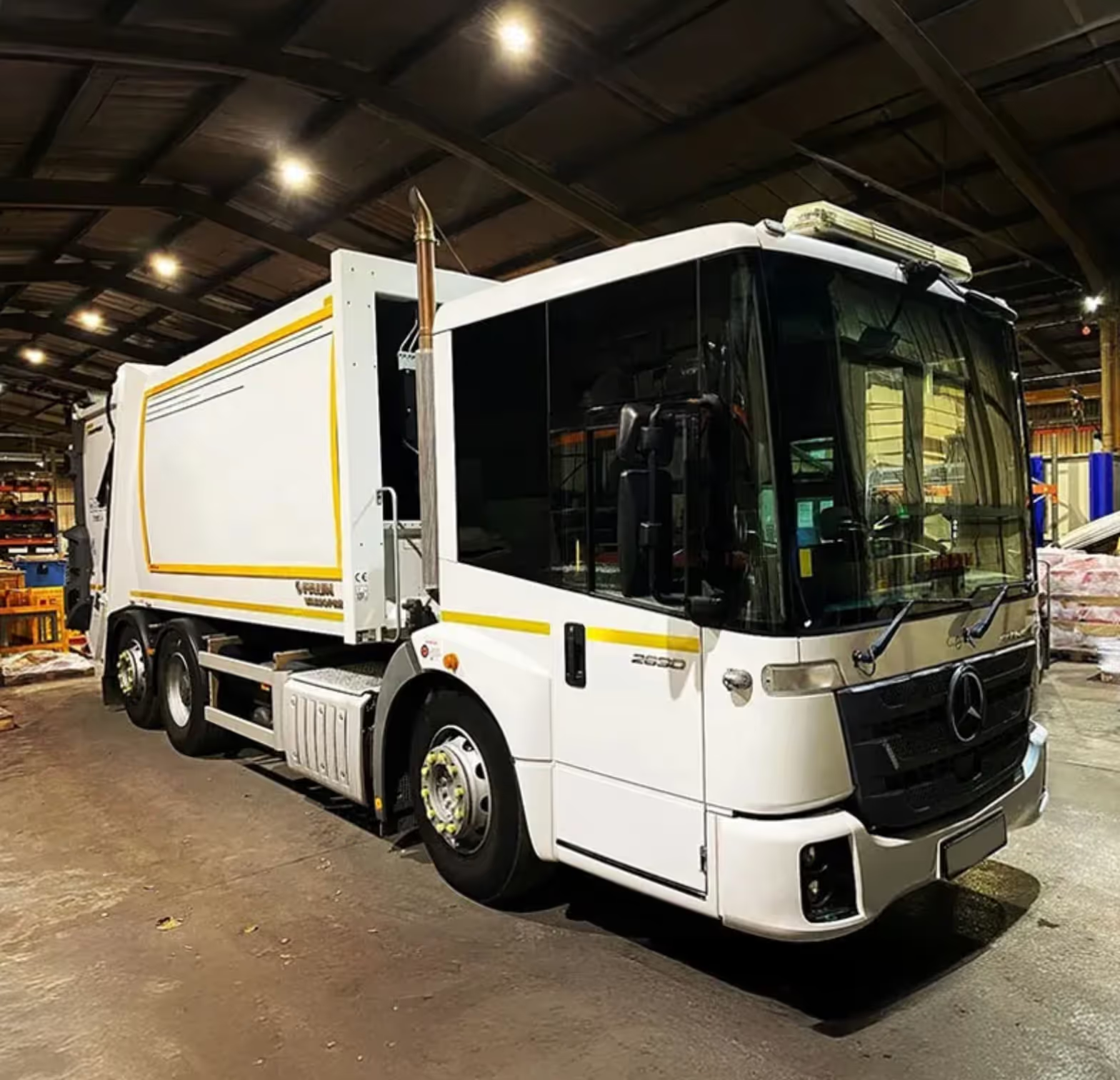
A bin lorry operates using a combination of hydraulic and mechanical systems:
- Bin lift mechanism raises and tips the bin
- Hopper receives waste
- Compaction packer compresses waste into the body
- Storage body holds compacted waste
- Ejection system unloads waste at the tip
This integrated system is why RCVs require specialist maintenance and trained operators.
How Heavy Is a UK Bin Lorry?
The weight of a bin lorry is one of the most important factors in refuse collection, yet it’s also one of the most commonly misunderstood. While many people assume body size determines how much waste a vehicle can carry, the reality is far more complex.
Typical Gross Vehicle Weights in the UK
Most UK refuse collection vehicles operate at 26 tonnes gross vehicle weight (GVW). This has become the industry standard because it strikes a practical balance between payload capacity, manoeuvrability, and compliance with UK road regulations.
That said, other configurations are also used depending on route type and operational requirements:
- 18-tonne RCVs are often used in narrow streets, town centres, or areas with access or weight restrictions.
- 32-tonne and specialist heavy configurations may be used in specific commercial or industrial applications, although these are less common for household collections.
Understanding GVW vs Payload
It’s critical to understand the difference between GVW and payload, as confusing the two can lead to illegal operation and costly penalties.
- GVW (Gross Vehicle Weight) is the maximum legal weight of the vehicle when fully loaded. This includes the chassis, body, fuel, crew, onboard equipment, and waste.
- Payload is the actual amount of waste the vehicle can legally carry once everything else has been accounted for.
In practical terms, payload is what really matters to operators, because it determines how many bins can be collected before the vehicle must tip.
What Affects the Payload of a Bin Lorry?
Two refuse trucks may look almost identical from the outside but have vastly different payload capacities. This is because payload is influenced by a combination of technical factors:
Chassis specification
Different manufacturers and chassis models vary significantly in unladen weight. A lighter chassis leaves more legal weight available for waste.
Body weight and design
The refuse body itself can account for several tonnes. Heavier-duty bodies, reinforced designs, or larger compaction systems increase durability but reduce payload.
Axle configuration
Axle limits play a crucial role. Even if the overall GVW is legal, overloading a single axle is still illegal. Correct axle distribution is essential for compliance.
Onboard equipment
Modern RCVs often include:
- CCTV and camera systems
- Bin weighing equipment
- Telematics and tracking
- Additional safety features
Each of these adds weight, reducing available payload.
Waste density
Waste type has one of the biggest impacts on payload:
- Food waste is extremely dense and heavy, often reaching weight limits long before the body is full.
- General waste sits somewhere in the middle.
- Dry recycling is lighter, meaning volume is usually the limiting factor rather than weight.
This is why vehicles used for food waste collection often require different specifications to those used for dry recycling or mixed waste.
Why Payload Matters in Day-to-Day Operations
Payload directly affects:
- How often a vehicle needs to tip
- Route efficiency and completion times
- Fuel or energy consumption
- Compliance with DVSA weight regulations
A truck that regularly runs overweight not only risks fines and enforcement action but also suffers increased wear on brakes, suspension, tyres, and axles.
Why Body Size Alone Is Misleading
A common misconception is that a larger body automatically means higher capacity. In reality, a larger body may simply encourage overloading if payload is not carefully managed. Two trucks with the same body volume can legally carry very different amounts of waste depending on their chassis, axle setup, and onboard equipment.
This is why specifying a refuse truck should always start with route data and waste type, not just body size.
Getting the Weight Right from the Start
At Premier Refuse Solutions, we always assess payload requirements alongside route profiles and waste streams. This ensures the vehicle operates legally, efficiently, and reliably from day one.
Choosing the right GVW and payload configuration helps avoid unnecessary tipping, reduces downtime, and protects both your fleet and your operators.
Is a Bin Lorry an HGV?
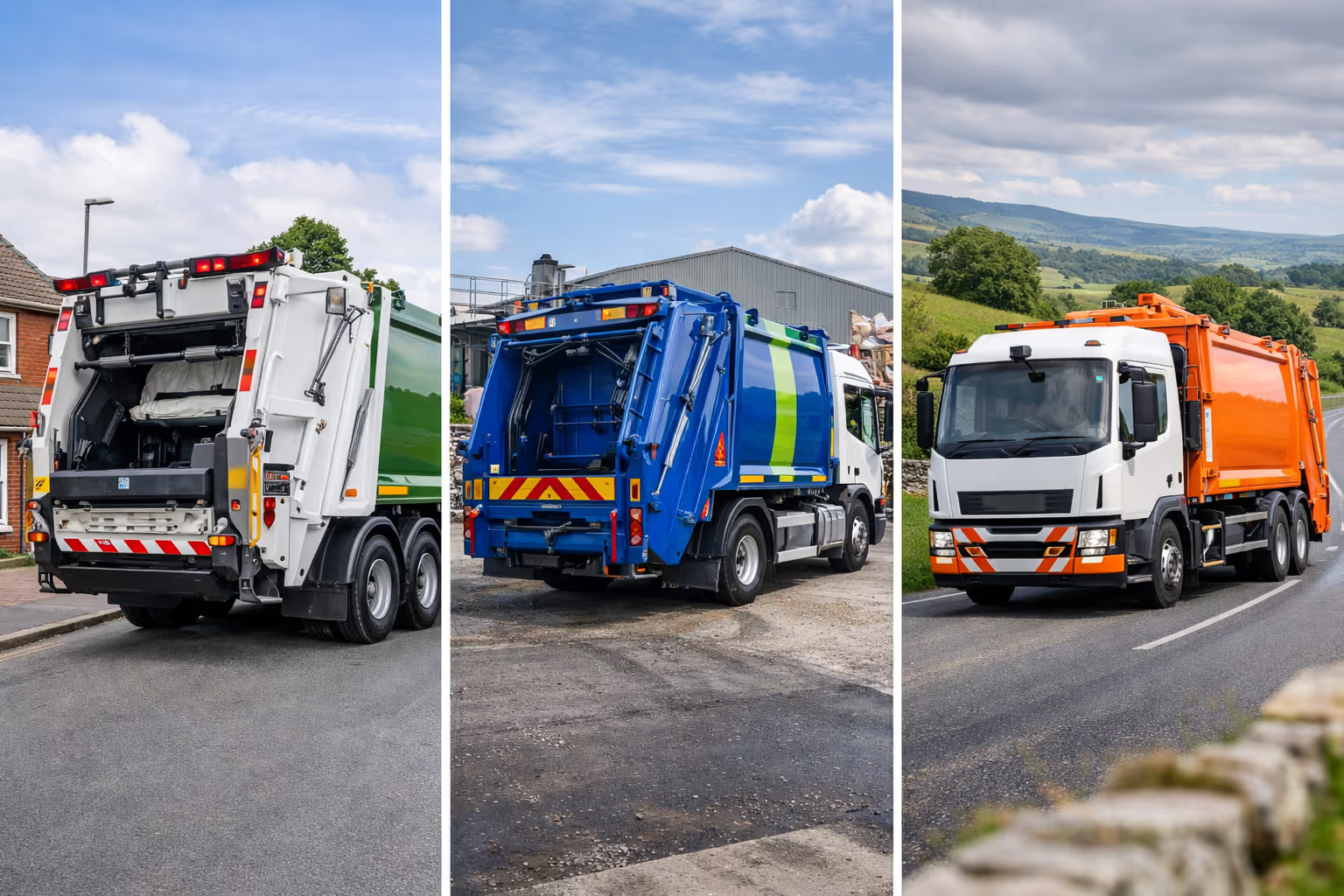
Yes. Bin lorries are classed as Heavy Goods Vehicles (HGVs).
Driving licence requirements:
- Category C1: 3.5t–7.5t vehicles
- Category C: vehicles over 3.5t (most full-size RCVs)
Drivers must also meet CPC (Certificate of Professional Competence) requirements where applicable.
Do You Need an Operator’s Licence for Refuse Trucks?
In most cases, yes.
If you operate goods vehicles over 3.5 tonnes as part of a business, you usually need a Goods Vehicle Operator’s Licence, unless a specific exemption applies. This covers:
- Vehicle maintenance standards
- Operating centres
- Driver management
Operator compliance is a major factor when hiring or purchasing vehicles. Find out about operating licenses here.
How Much Horsepower Does a Bin Lorry Have?
Horsepower varies depending on chassis and duty cycle. Typical UK RCVs range from 250 to 350+ bhp.
However, horsepower alone is not the deciding factor. What matters more is:
- Torque delivery
- Low-speed pulling power
- Reliability under stop-start conditions
Urban routes place very different demands on vehicles compared to long rural rounds.
How Much Does a Refuse Truck Cost in the UK?
The cost of a refuse collection vehicle in the UK can vary significantly, depending on whether the vehicle is new, used, refurbished, or electric, and how it is specified for real-world operation. Headline prices can be misleading, so understanding what you are actually paying for is critical.
Typical Price Ranges in the UK
As a general guide, current UK market pricing typically falls into the following ranges:
- Used diesel refuse trucks usually range from £40,000 to £90,000, depending on age, mileage, condition, and remaining service life.
- New diesel refuse trucks generally sit between £180,000 and £250,000+, with the final figure heavily influenced by specification and body configuration.
- Electric refuse trucks often start at £350,000+, reflecting battery costs, charging systems, and newer technology.
These figures represent realistic market expectations rather than fixed prices, as specification plays a decisive role.
Why Specification Drives Cost
Two refuse trucks with similar body sizes can differ in price by tens of thousands of pounds. This is because specification determines not only purchase price, but long-term operating costs and reliability.
Chassis brand and model
Different manufacturers vary in base price, durability, emissions compliance, and parts availability. Chassis choice also affects fuel efficiency, service intervals, and resale value.
Body manufacturer and build quality
The refuse body is a major cost component. Heavier-duty bodies designed for food waste or high-compaction applications cost more but may offer longer service life and reduced downtime.
Bin lift type
Split lifts and trade lifts differ in cost and capability. Heavy-duty trade lifts with reinforced hydraulics typically cost more but are essential for commercial and food waste collections.
Safety systems and compliance equipment
Modern refuse trucks are increasingly specified with:
- Multiple camera systems
- Proximity sensors
- Audible warning devices
- Side underrun protection
These features add upfront cost but are often essential for compliance and risk reduction.
Emissions technology
Euro 6 diesel systems, hybrid drivetrains, and fully electric platforms all carry different cost implications. Lower-emission technology often increases purchase price but may reduce charges in Clean Air Zones and improve long-term compliance.
Used vs New: Understanding the True Cost
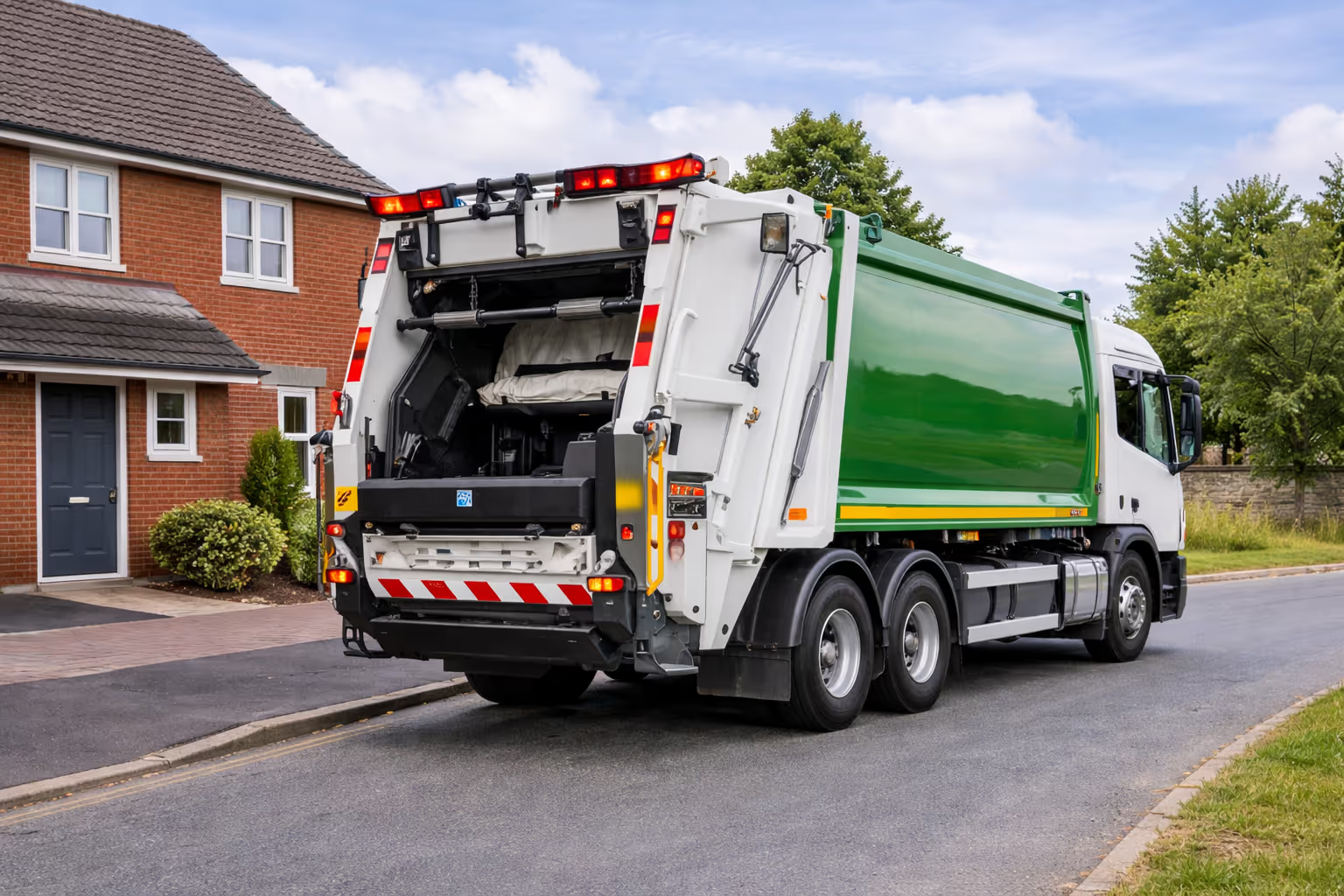
Used refuse trucks may appear more cost-effective initially, but buyers should assess:
- Remaining body life
- Hydraulic wear
- Maintenance history
- Compliance with current emissions standards
A cheaper used truck can quickly become expensive if major components require replacement or if the vehicle fails to meet local emissions requirements.
New vehicles offer predictability, warranty coverage, and the ability to specify exactly what is needed, but they require a larger upfront investment.
The Cost of “Ready-to-Work” vs Headline Price
One of the most common mistakes buyers make is comparing vehicles based on headline price alone. A “ready-to-work” refuse truck includes:
- Correct bin lift for your routes
- Safety and camera systems installed
- Compliance equipment fitted
- Vehicle fully serviced, tested, and operational
A lower-priced vehicle may still require tens of thousands of pounds in additional work before it can legally and safely operate.
Lifetime Cost Matters More Than Purchase Price
The true cost of a refuse truck is not just the purchase price. It also includes:
- Fuel or energy consumption
- Maintenance and downtime
- Parts availability
- Residual value at end of life
In many cases, a higher-spec vehicle delivers better value over its lifetime than a cheaper alternative.
Getting Value, Not Just a Price
At Premier Refuse Solutions, we focus on matching vehicles to operational reality. That means ensuring the price reflects a truck that is compliant, reliable, and fit for purpose from day one, not one that looks cheap but costs more in the long run.
If you’re comparing options, always ask what is included in the price and whether the vehicle is truly ready to work on your routes.
How Many Bin Lorries Are There in the UK?
There is no live public count. However, with over 300 local authorities in England alone, plus private contractors across England, Scotland, Wales, and Northern Ireland, the UK operates many thousands of RCVs daily.
What Time Can Bin Lorries Start Operating?
Start times vary by council and route type. Many collections begin early in the morning to:
- Avoid traffic
- Complete routes efficiently
- Meet service level agreements
Noise considerations are balanced against the legal duty to collect waste.
Is It Illegal to Leave Wheelie Bins on the Pavement?
This depends on local council rules. Generally:
- Bins should not cause an obstruction
- Councils may issue guidance or enforcement notices
Rules vary by authority, so always check local policy.
What Sizes of Bins Can a Bin Lorry Lift?
Bin compatibility depends on the bin lift fitted. Common UK lifts handle:
- 120L, 180L, 240L household bins
- 360L, 660L, 1100L trade bins
Always confirm maximum lift weight, especially for food waste and commercial collections.
Safety Features to Look for in Modern RCVs
Safety is critical in refuse collection. Look for:
- Nearside and rear cameras
- Proximity sensors
- Audible warnings
- Interlocked bin lifts
- Clear maintenance records
A well-maintained RCV protects crews, pedestrians, and operators alike.
Diesel vs Electric Bin Lorries: What’s Changing?
Diesel remains dominant due to range and infrastructure, but electric refuse trucks are gaining momentum, particularly for:
- Urban routes
- Low-emission zones
- Sustainability-focused councils
Many fleets are now operating mixed diesel and electric vehicles, read more about vehicle types here.

Buying vs Hiring a Bin Lorry
Deciding whether to buy or hire a refuse truck depends largely on how long the vehicle is needed, how predictable the work is, and how much flexibility the operation requires. Both options have clear advantages when used in the right context.
Hiring a bin lorry is often the most practical solution for short-term contracts, seasonal increases in demand, emergency cover, or when a vehicle is off the road for repairs. Hire allows operators to maintain service continuity without committing large capital sums, and it offers flexibility when route requirements change. It is also a useful option for trialling different vehicle types or specifications before making a long-term investment.
Buying a refuse truck, on the other hand, is better suited to long-term operations with stable routes and consistent waste streams. Ownership allows for full vehicle customisation, predictable asset planning, and lower costs over the vehicle’s lifecycle. However, it also brings responsibility for maintenance, compliance, and depreciation. The right decision comes down to balancing cost, flexibility, and operational certainty, ensuring the vehicle supports your business rather than constraining it.
Hiring is ideal for:
- Short-term contracts
- Emergency cover
- Seasonal demand
Buying suits:
- Long-term fleet planning
- Custom specifications
- Stable routes
Your choice should be driven by operational reality, not just cost.
Quick Checklist Before Choosing a Refuse Truck
Choosing the right refuse collection vehicle is about far more than simply finding one that’s available. A well-specified bin lorry should match your routes, waste streams, compliance requirements, and long-term operating costs. Overlooking small details at the specification stage can lead to inefficiencies, compliance issues, or costly downtime later on.
Before committing to a hire or purchase, operators should assess route access and street width, as tight urban environments may require a narrower chassis or reduced turning circle. Waste type also plays a critical role. Food waste is significantly heavier than dry recycling, which directly affects payload, axle loading, and lift specification. Bin compatibility is equally important, particularly on mixed routes where domestic and trade containers are collected together.
Emissions compliance should be reviewed early, especially for operations within Clean Air Zones or low-emission areas. This may influence whether diesel, hybrid, or electric vehicles are viable options. Finally, consider maintenance support and uptime expectations. A refuse truck that looks right on paper but lacks reliable servicing support can quickly become a liability. The right checklist ensures the vehicle works in the real world, not just in theory.
- Route type and access constraints
- Waste stream and density
- Bin compatibility
- Payload requirements
- Emissions compliance
- Maintenance support
- Budget and lifecycle costs
Need Help Choosing the Right Bin Lorry?
At Premier Refuse Solutions, we help operators make the right decision based on real-world use, not assumptions. Whether you need hire, purchase, or advice, we focus on uptime, compliance, and operational fit.