
How the Shift to Electric Refuse Trucks Is Shaping a Greener Future
The UK waste management sector is undergoing a major transformation, with refuse trucks moving towards electric power as part of the drive to meet the Government’s 2035 zero-emission targets. Since the UK Government confirmed its zero-emission vehicle plans in November 2021, sustainability has become a central focus across the heavy goods vehicle (HGV) industry, including waste and recycling fleets.
With tackling climate change high on the national agenda, the Government has outlined clear intentions to phase out the sale of new non-zero-emission HGVs weighing up to 26 tonnes by 2035. By 2040, all newly sold HGVs will be required to be fully zero-emission at the exhaust.
What does this mean for the waste management sector?
Refuse collection vehicles have been identified as a priority for electrification, placing them firmly at the centre of the UK’s carbon reduction strategy. As a result, the waste management industry is seeing a growing push towards cleaner, more efficient vehicle solutions.
This shift represents a defining moment for the sector, as operators adapt to new regulations while seeking environmentally responsible ways to maintain reliable waste collection services. By 2035, electric refuse trucks are expected to become a common sight on streets across the UK.
Are electric refuse trucks a new idea?
Electric refuse trucks are not an entirely new concept. However, their adoption has accelerated significantly in recent years. This increase is largely driven by rising concerns around air quality, emissions, and the long-term environmental impact of diesel-powered vehicles.
The first electric refuse truck was commissioned in 2017, marking an important step forward in sustainable waste collection. Since then, uptake has continued to grow as technology improves and government targets become clearer, encouraging fleet operators to explore electric alternatives.
Why is there a need for electric refuse trucks?
Environmental responsibility has become a key consideration for businesses and public bodies alike. As awareness of climate impact increases, the waste management industry is under pressure to reduce its reliance on traditional diesel vehicles.
The move towards electric refuse trucks is driven by several factors:
- Environmental concerns
- Increasing regulatory requirements
- Long-term cost efficiencies
- Advances in vehicle technology
- Public health considerations
Electric refuse trucks vs traditional diesel vehicles
With electric refuse trucks playing a growing role in the future of waste collection, it’s important to understand how they compare to conventional diesel refuse vehicles. For operators planning a transition, optimising performance and cost is key.
Environmental impact
Electric refuse trucks produce zero tailpipe emissions, helping to improve local air quality and significantly reduce greenhouse gas output. This makes them an increasingly attractive option for councils and operators working in urban environments.
Noise reduction
Electric vehicles operate far more quietly than diesel alternatives. This reduces noise disruption during early morning or late-night collections, benefiting both residents and operators.
Operating costs
Although electric refuse trucks typically involve higher upfront costs, their lifetime running expenses are often lower. Electricity is generally cheaper than diesel, and electric drivetrains contain fewer moving parts, leading to reduced maintenance requirements.
Energy efficiency
Electric refuse trucks are able to cover longer distances using less energy, improving overall efficiency compared to traditional internal combustion vehicles.
Government incentives
Various incentives, grants, and tax relief schemes are available to support the adoption of electric vehicles, helping to reduce the total cost of ownership for electric refuse trucks.
Public health benefits
Lower emissions of nitrogen oxides and particulate matter contribute to improved public health, particularly in areas affected by high traffic volumes and poor air quality.
Adaptability within existing fleets
Electric refuse trucks can often be introduced into existing waste collection operations with minimal disruption. Many models are designed to work alongside current infrastructure and can be configured to suit different body types, payloads, and operational requirements.
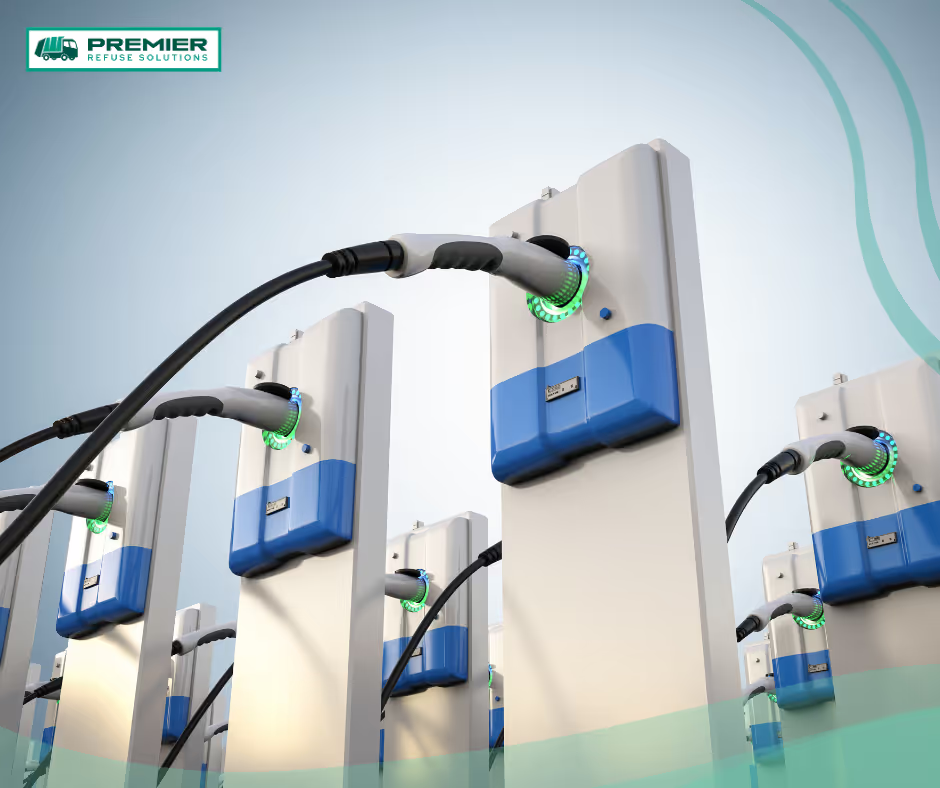
Supporting the transition with Premier Refuse Solutions
At Premier Refuse Solutions, we work closely with waste operators to help them understand how electric refuse trucks fit into their current and future fleet strategies. As the industry evolves, making informed decisions around vehicle choice has never been more important.
Whether you’re reviewing upcoming regulations or planning a gradual transition away from diesel, understanding the role of electric refuse trucks is a vital step towards building a more sustainable waste operation.